Copper CNC Machining for Busbars, Heat Sinks and RF Parts
Send your drawing. We match it with shops that cut copper regularly, not shops that will learn on your part. Reply within 24 business hours.
Why buyers send copper work here
It comes down to the match: shops that fit your part, from the first quote.
Matched by specialisation
Your RFQ goes to up to 3 shops that cut copper every week, picked for your grade, part size and tolerance. Not a general directory.
Professional suppliers
Shops in the network quote to your drawing, communicate clearly and keep you updated while your parts are made.
You deal with the shop
Quotes, terms and delivery are agreed between you and the shop. Free for buyers.
Does your part need a copper specialist?
Any shop can cut a copper block. The trouble starts at the edges, the finish and the grade. Tick what applies to your part. Two or more ticks usually means you want a shop that handles copper every week.
Typical machined copper parts
- Busbars and bus links
- Heat sinks and cold plates
- RF and waveguide parts
- Vacuum chamber components
- Resistance welding electrodes
- EDM electrodes
- Induction coils and contacts
- Terminals, lugs and connector bodies
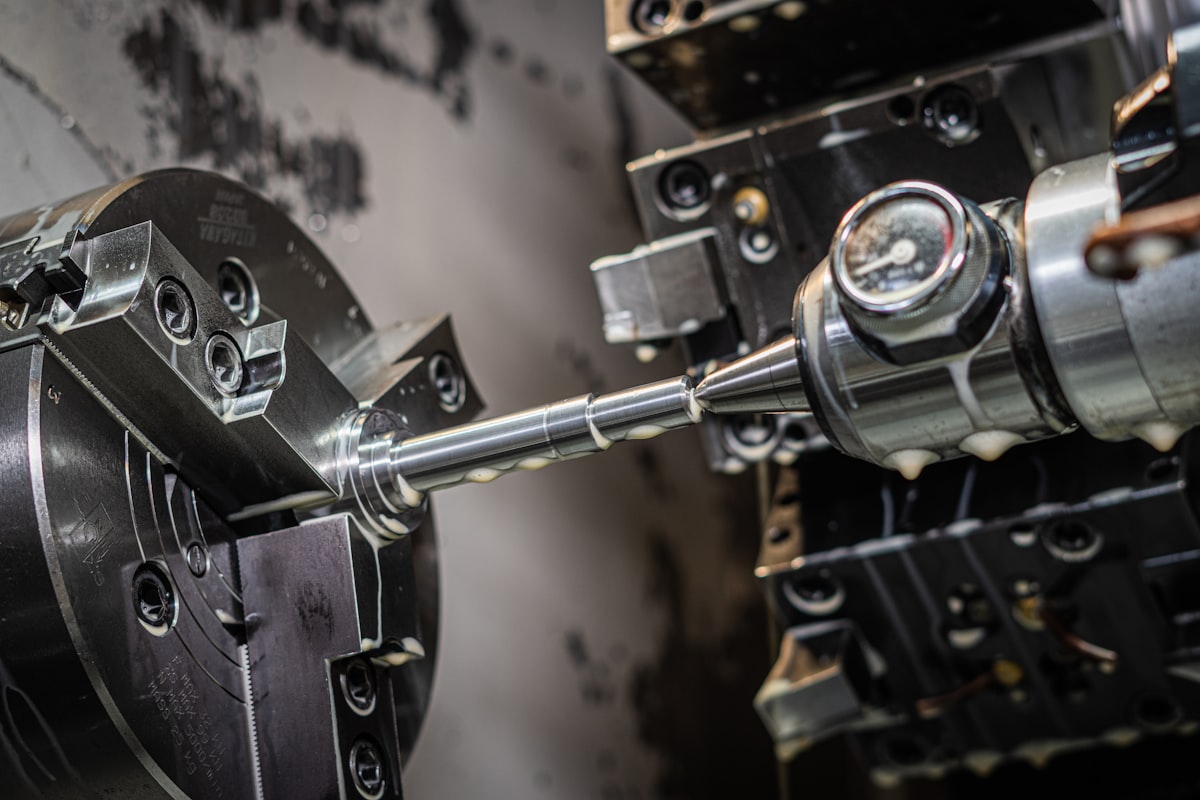
Copper is soft, sticky and a good conductor of heat, so it pulls heat out of the cutting edge instead of leaving with the chip. Shops that run it often solve that with tool geometry and coolant rather than with a slower feed.
Pure copper or a free-machining grade?
This is the decision that sets the price of a copper part. Both look like copper on the drawing. One of them takes several times longer to cut.
Pure copper, C101 and C110
Nothing added to break the chip. Around 100 percent IACS, and a machinability rating near 20.
- Specify it when a conductivity, contact resistance or thermal number is on the print
- Required for ultra high vacuum and for brazing in hydrogen (C101)
- Expect longer cycles, more hand deburring and a higher price per part
Free-machining copper, C145 and C147
Tellurium or sulphur added so the chip breaks. Still above 90 percent IACS, with a machinability rating near 85.
- Right for terminals, connector bodies and anything with threads or cross holes
- Cleaner holes and threads, much shorter cycles
- Not for ultra high vacuum, and stock is thinner on the ground than C110
Copper grades and what they cost you in machining
Published typical values for each alloy. Conductivity is percent IACS and machinability is rated against free-cutting brass C360 at 100. Tolerances are what these grades commonly hold, not what any shop promises on your geometry.
| Grade | Conductivity %IACS | Machinability | What it means on the floor | Typical tolerance |
|---|---|---|---|---|
| C101 / C10100 OFE | 101 | 20 | Oxygen free copper. Long stringy chips and a burr on almost every edge. Specify it when conductivity, ultra high vacuum or hot hydrogen are in play. | ±0.025 mm typical, tighter needs a separate finish pass |
| C110 / C11000 ETP | 100 | 20 | The everyday electrical copper and easier to source than C101. It cuts the same way. Not for ultra high vacuum or brazing in hydrogen. | ±0.025 mm typical |
| C145 tellurium copper | 93 | 85 | Tellurium breaks the chip. Holes, threads and small features come out clean and the cycle time drops sharply against pure copper. | ±0.01 to ±0.02 mm is common |
| C147 sulphur copper | 95 | 85 | The same trick with sulphur instead of tellurium. A little more conductive than C145 and harder to find in stock. | ±0.01 to ±0.02 mm is common |
| C182 chromium copper | 80 | 20 | Age hardened, far stronger and harder than pure copper. Picked for welding electrodes and parts that stay stiff when hot, not for cutting speed. | ±0.02 mm typical |
| C360 brass (reference) | 26 | 100 | Not copper. It sits here to show the scale: the easiest of the group to cut and by far the worst conductor of it. | ±0.01 mm is routine |
Not sure which one your part needs? Write the electrical or thermal requirement on the drawing and leave the grade open. A shop can then offer the cheaper alloy that still meets it.
Where machined copper parts go
Each of these brings its own paperwork. Mention material certificates, plating specs, cleanliness or first article inspection in your RFQ so we match shops that already work that way.
Power electronics
Busbars, terminals, contact blocks and cold plates in C101 and C110.
RF and microwave
Waveguide sections, cavity filters and antenna parts where surface finish sets the loss.
EV and battery
Cell links, pack busbars and cooling plates, often plated after machining.
Semiconductor and vacuum
Chamber parts, feedthroughs and seals in oxygen free copper.
Welding and EDM
Resistance welding electrodes in C182 and sinker EDM electrodes in C101.
Thermal management
Heat sinks, heat spreaders and cold plates where copper replaces aluminum for the watts.
How it works
One RFQ from you. A short list of shops that fit. No bidding platform and no middleman on the order.
Send your RFQ
Upload a STEP file or PDF drawing and tell us the grade, quantity, tolerance and finish. Takes about three minutes.
We match up to 3 shops
We read the drawing and pick shops whose machines, copper experience and part size fit. You hear from us within 24 business hours.
Shops quote you directly
Each shop contacts you with a quote. You compare, ask questions and place the order with the one you choose.
Every step in detail, including the checklist a shop has to pass
What drives the price of a machined copper part
Five things decide most copper quotes. If a price looks high, one of these is usually the reason, and two of them you can change on the drawing.
- Copper weight and priceCopper is bought by weight and the price moves week to week. Quotes older than a few weeks usually need a refresh before you order.
- GradeA free-machining grade can cut cycle time several times over. On pure copper you pay for the time it actually takes to cut it.
- Burr controlCopper smears instead of breaking. Thin edges, cross holes and slots often need hand work after the machine is done.
- Finish and platingRa 0.8 micrometre or better, degreasing, passivation and tin or silver plating each add cost and a few days.
- Quantity and setupHolding soft copper without marking it takes longer to fixture. That setup spreads over the batch, so price per part drops quickly with quantity.
Have a copper drawing ready?
Send the short version now. We will ask for anything missing. To give full details up front, use the full RFQ form.
Your files go only to the shops we match. Ask for an NDA and nothing is shared until it is signed.
Cut copper every week? Get RFQs that suit it.
Shops see a preview of each request before paying for it and talk to the buyer directly. We take no commission on the order.
Do you machine the copper yourselves?
No. We are a matching service, not a machine shop. We read your RFQ and pass it to shops that cut copper regularly. They quote you, and you place the order with the one you pick.
Is this free for buyers?
Yes. Sending an RFQ and receiving quotes costs you nothing. Shops pay us for matched requests. Price, terms and delivery are agreed between you and the shop.
Which copper grade should I put on the drawing?
If the part carries current or heat and the number matters, stay on C101 or C110. If it does not, C145 or C147 cut several times faster and still hold above 90 percent IACS. Write the property you need next to the grade so a shop can suggest the cheaper option without guessing.
Who sees my drawing?
Shops first see a short preview: part type, copper grade, size, quantity, tolerance and finish. It does not carry your name, your company or your files. Your contact details and files go only to the shops we match, up to 3. If you ask for an NDA we hold the files until it is signed.
How many quotes will I get?
Up to 3. If only one or two shops suit the part, we send it to fewer rather than fill the list with shops that will learn on your job.
Which file formats can I send?
STEP or IGES for the model plus a PDF drawing with tolerances, finish and plating notes. DWG and DXF work for flat busbar profiles. A STEP file together with a PDF drawing gets the most accurate quotes.
Guides for copper buyers
- Design
Copper Mold Inserts for Injection Molding: Cooling Gains
Copper alloy inserts pull heat out of mold hot spots that steel cannot. Which alloys are used, their wear limits, fit and plating, and what to put on the RFQ.
- Design
Copper Induction Coils and Inductor Parts: Machining Specs
Induction coils are water-cooled copper conductors shaped to a part. How skin depth sets the wall, how channels and joints are made and what to specify.
- Cost
Copper Grounding and Earthing Parts: Machined vs Cast
Ground bars, lugs and clamps can be machined from copper bar or cast in bronze. Conductivity, tolerance, volume break-even and what to write on the RFQ.