Replacing Beryllium Copper: Which Beryllium-Free Alloy Fits the Part
October 10, 2026
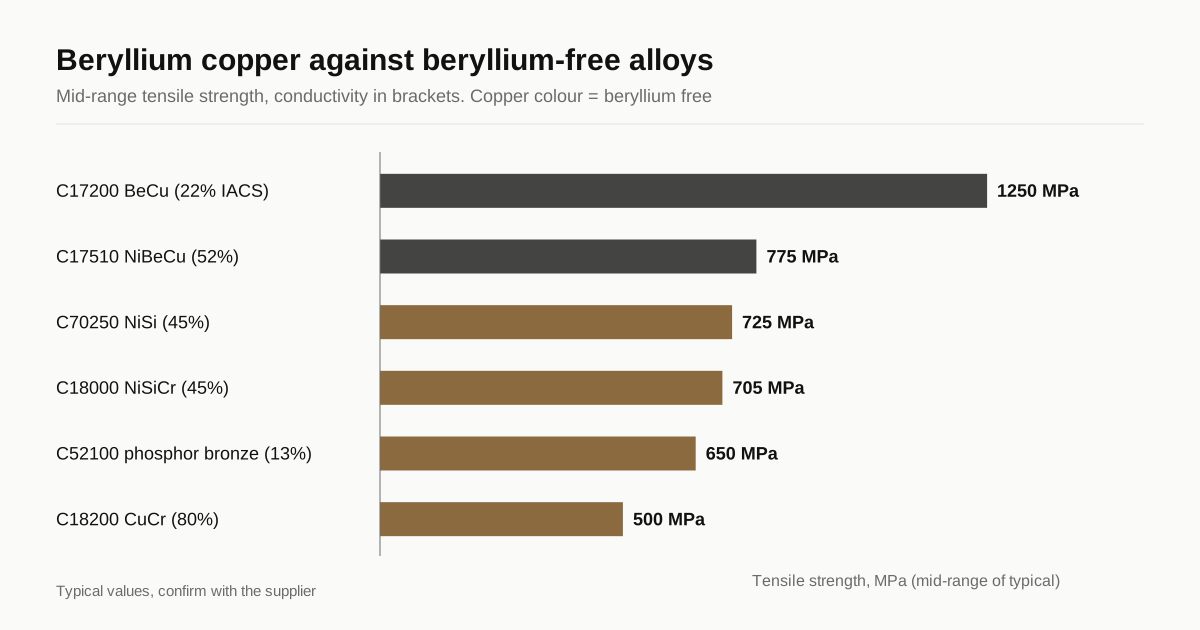
Beryllium copper, C17200, is the strongest of the common copper alloys. It makes springs, connector contacts, mold inserts and non-sparking tools. It also carries a handling burden, because machining it creates fine beryllium containing dust. That burden is why buyers ask for something else. This guide sets out the beryllium-free options, what each gives up and the cases where no substitute works.
Why replace C17200 at all
Solid beryllium copper is safe to handle in finished form. The concern is airborne beryllium particulate from machining, grinding and some welding. Exposure over time can cause chronic beryllium disease, and regulators set tight limits, for example an eight hour limit of 0.2 micrograms per cubic meter under US OSHA rules. Shops that cut it need extraction, wet cutting, cleaning routines and monitoring. Many shops decline the work, and others charge for the controls.
Replacing it removes that burden for the shop and for your supply chain. It is worth doing when the part does not need the full performance of the alloy.
Our own guide to machining beryllium copper C17200 covers the shop controls in detail.
The main alternatives
| Alloy | UNS | Beryllium free | Conductivity, % IACS | Typical strength, MPa | Typical use |
|---|---|---|---|---|---|
| Beryllium copper | C17200 | No | About 22 | 1,100 to 1,400 aged | Springs, connectors, tools |
| Nickel beryllium copper | C17510 | No | 45 to 60 | 700 to 850 | Electrode holders, springs |
| Nickel silicon copper | C70250 | Yes | 40 to 50 | 650 to 800 | Connectors, lead frames, springs |
| Nickel silicon chromium copper | C18000 | Yes | About 45 | 650 to 760 | Electrodes, mold inserts |
| Chromium copper | C18200 | Yes | About 80 | 450 to 550 | Electrodes, heat parts |
| Chromium zirconium copper | C18150 | Yes | About 80 | 450 to 550 | Hot, heavy duty parts |
| Phosphor bronze | C51000, C52100 | Yes | 11 to 15 | 500 to 800 | Springs, contacts |
All are typical values for common tempers. They vary with product form and supplier. The grade pages in the copper grade reference give the figures this site publishes for each alloy, including C17200, C17510 and C18200.
Nickel silicon copper
C70250 and its relatives, sometimes called Corson alloys, harden by precipitating nickel silicide. They give strong, stable springs with conductivity of roughly 40 to 50 percent IACS, well above beryllium copper. Resistance to stress relaxation is good, which matters for contacts that hold force for years. Connectors and lead frames use them heavily.
They do not reach the fatigue life of beryllium copper at its top strength, so a spring that works at the edge of the beryllium copper range may not survive the swap without redesign. For most contact springs the margin is enough.
Nickel silicon chromium copper
The C18000 family adds chromium for hot strength. It has conductivity near 45 percent IACS and strength in the 650 to 760 MPa range, with good wear resistance. Mold makers use it as a beryllium-free insert alloy, and welding shops use it for electrodes and holders where chromium copper is too soft. Thermal conductivity is well below pure copper, so a mold insert needs checking against the cooling target.
Chromium and chromium zirconium copper
C18200 and C18150 reach about 80 percent IACS, far above any other strength alloy here, at a strength around 450 to 550 MPa. They are the right choice for thermal and electrical duty where a modest strength is enough, and for welding electrodes. They are not a spring replacement. See C18150 vs C18200.
Phosphor bronze
Phosphor bronze is the classic spring alloy. It has low conductivity, 11 to 15 percent IACS, but good formability and fatigue behavior at lower stress. It is a reasonable replacement where the part springs but does not carry much current. Phosphor bronze vs copper explains the choice.
Where there is no real substitute
- Highest strength springs with fatigue life. C17200 in TH04 temper is hard to beat for tough, small springs and diaphragms.
- Non-sparking tools. Aluminum bronzes are the usual alternative here. They are not copper conductors but they meet the same need.
- Strength and moderate conductivity together at small sizes. Beryllium copper gives both in thin sections that other alloys cannot hold.
- Parts qualified under an existing approval. Aerospace and some medical or oil and gas parts need re-qualification, which can cost more than the handling controls.
If your part is one of these, stay with C17200 and buy from a shop that has the controls. State the alloy plainly in the RFQ.
Qualifying a substitute
Do not swap the alloy on the drawing and ship. A substitute needs a short test plan.
- Compare the duty. List the force, deflection, cycle count, temperature and current the part sees.
- Order a trial lot. Ten to fifty parts in the new alloy, aged to the supplier’s standard schedule.
- Test the function. Measure spring force against deflection, contact resistance, fatigue cycles and force retention after heat exposure.
- Check dimensions after aging. Different alloys move differently, so a drawing tuned for beryllium copper may need a new allowance.
- Document it. Record the alloy, temper, heat treatment and test results so the change can be traced and repeated.
For spring contacts, stress relaxation matters as much as peak strength. A contact that loses force after a few years in a warm connector is a field failure, and nickel silicon copper is chosen for exactly that property.
Mold inserts and thermal parts
Mold makers use beryllium copper for inserts because it conducts heat well for a high strength alloy. A beryllium-free insert, usually nickel silicon chromium copper, conducts less. Check the cooling design: a slower heat path can lengthen the cycle time or move hot spots. For inserts that need conductivity above all, chromium copper conducts best of the strength alloys and is soft enough to wear faster. The right alloy depends on whether the insert’s job is cooling, wear resistance or both. Copper mold inserts for injection molding goes through that decision.
Cost and supply
Beryllium-free alloys are not always cheaper. Nickel silicon copper strip and bar are common in electronics but less so in large machined sections. Chromium copper is widely stocked. Phosphor bronze is everywhere. Beryllium copper itself costs a lot, so the saving on material is often real, and the saving on shop controls is a bonus. Ask for stock status before you commit, because a rare alloy in an odd size can wait weeks. See copper lead times.
Machining and heat treatment
All of these alloys age harden, so the same sequence applies as for beryllium copper. A shop machines in the solution treated condition, where cutting is easier, then ages the part to full strength. Dimensions shift slightly during aging, so mark which features must hold after heat treatment. Copper tempers explained covers the codes.
Machinability is about 20 on the scale where free-cutting brass is 100. Nickel and chromium dusts are respiratory irritants and nickel is an allergen, so shops should still use ordinary extraction, but the controls are far lighter than for beryllium.
How to write the callout
Nickel silicon copper, UNS C70250, temper TM04 (or per supplier standard).
Beryllium free: no intentional beryllium, certificate to confirm.
Finished hardness and conductivity per attached table.
State “beryllium free” in words, because the UNS number alone may not stop a stockist substituting. Ask for the certificate showing chemistry. Copper material certificates explains what to look for.
Checklist for the RFQ
- Name the target alloy and say whether alternatives are acceptable
- Write “beryllium free” if that is a hard requirement
- State minimum strength or hardness and conductivity
- Give the spring or contact duty so the shop can advise on fatigue
- Mark dimensions that must hold after aging
- Ask for the certificate and heat treatment record
Send the drawing through the RFQ form. We match it with up to 3 shops that cut copper and reply within 24 business hours.
Frequently asked questions
Why do buyers ask for a beryllium copper alternative?
Beryllium copper is safe in finished form, but machining and some finishing steps release beryllium particulate that needs controls. Many buyers and shops prefer to avoid that burden, and some company policies exclude beryllium altogether.
What is the closest substitute for C17200?
Nickel silicon copper such as C70250, and the nickel silicon chromium copper family, come closest on strength with conductivity around 40 to 50 percent IACS. None match the fatigue life and spring performance of beryllium copper at the top of its strength range.
Does C17510 count as beryllium-free?
No. C17510 is nickel beryllium copper, a low beryllium alloy. It contains beryllium, usually around 0.2 to 0.6 percent, and needs the same awareness in machining, even though the exposure risk is lower than with C17200.
Need a quote for this part?
Send the drawing. We match you with up to 3 copper shops and reply within 24 business hours.
Get matched with a copper machining shop