C14700 Sulfur Copper: What It Gains Over C110 and Where It Stops
October 12, 2026
When a copper part has turned features, threads and cross holes, pure copper makes the job slow. The free-machining coppers fix that by adding a small amount of another element that breaks the chip. C14500 uses tellurium. C14700 uses sulphur. This guide covers what C14700 offers, where the supply catches people out and what its limits are.
What C14700 is
C14700 is sulphur copper. It is nominally 99.9 percent copper with sulphur added, in the range of 0.20 to 0.50 percent. The sulphur is not dissolved in the copper. It forms small particles of copper sulphide that stay in the structure. When a tool cuts, the chip breaks at these particles and leaves in short curls instead of long gummy strings.
Pure coppers such as C11000 produce long continuous chips that wrap around the work and the tool, smear the surface and wear the cutting edge. C14700 cuts clean. That is the whole point of the alloy.
It is supplied mainly as drawn rod and bar, in the hard drawn temper known as H04, under ASTM B301 for free-cutting copper rod and bar. Plate and sheet are not normal stock items.
The trade in numbers
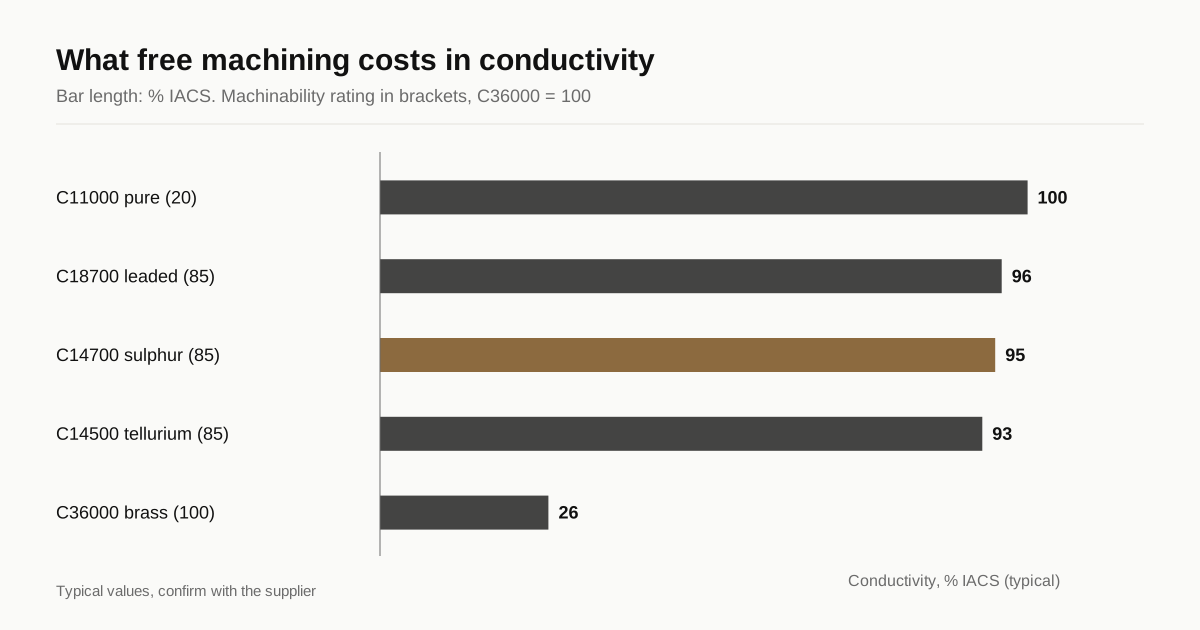
The table uses published typical values from the site’s copper grade reference. Machinability is rated against free-cutting brass C36000 at 100.
| Grade | Conductivity, % IACS | Machinability rating | Lead free |
|---|---|---|---|
| C11000 electrolytic tough pitch | 100 | 20 | Yes |
| C14700 sulphur copper | 95 | 85 | Yes |
| C14500 tellurium copper | 93 | 85 | Yes |
| C18700 leaded copper | 96 | 85 | No |
| C36000 free-cutting brass | 26 | 100 | No |
Going from C11000 to C14700 costs about five points of conductivity and gains more than four times the machinability. For most electrical parts that is an excellent exchange. The comparison with other grades is set out in C101 vs C110 vs tellurium copper and C110 vs C145 copper.
Values are for the alloy in a normal temper. They are not a promise from a shop or a mill.
Where C14700 wins
Feature heavy parts. Turned pins, terminals, threaded studs, fittings and connector bodies are the natural fit. Cycle times drop and tool life rises.
Lead free requirement. C14700 contains no lead. C18700 does, and it brings RoHS and REACH questions that many buyers reject on principle. C14700 avoids that without giving up much conductivity.
Slightly higher conductivity than tellurium copper. The published figures put it a couple of points above C14500. For a current carrying contact that is a small but real gain.
Lower alloying cost in principle. Sulphur is cheap and tellurium is not. Where both are stocked in a size, sulphur copper can come out a little cheaper, though material price swings with the metal market and the supplier.
Where C14700 stops
Supply is thinner. The main practical limit is availability. C14500 is the more widely stocked free-machining copper in many regions. C14700 may need a mill order or a long wait for a given size. On a small order, the bar can arrive after the parts should have shipped. Ask about stock before you specify it. See copper lead times for where delays hide.
Not for vacuum or hydrogen work. Sulphide particles and residual elements are unwelcome in ultra high vacuum, and the alloy is the wrong choice for hydrogen furnace brazing. Use oxygen free copper for those jobs, as covered in oxygen free copper for vacuum and UHV.
Reduced forming ability. The particles that break chips also make the metal less ductile than pure copper. Tight bends and heavy cold forming can crack it. If a part has to be turned and bent, think about C11000 or C12200.
Fusion welding is poor. Free-machining coppers do not weld well because the added elements cause cracking in the weld zone. Brazing and soldering are normally fine, but confirm with the supplier for your joint. See joining machined copper parts.
Conductivity below pure copper. If the part’s electrical performance is the whole job and it has few features, C11000 or C10100 is still the better grade.
Machining notes
Shops usually run C14700 at the same settings as C14500, and if the shop has cut one it can cut the other without a trial. A shop new to free-machining copper should still cut a sample.
C14700 behaves much like C14500. Use carbide tools with sharp, positive rake edges, good chip evacuation and flood coolant. The chips are short, so automatic bar feeders and Swiss lathes run it comfortably. The turned finish is clean, and threads cut well.
A free-machining copper in H04 temper is hard drawn and holds size well in the lathe. After machining, burrs are small but still present, so plan deburring. Milling, turning, drilling and tapping copper gives the process side. For small slender parts see Swiss turned copper pins and contacts.
Typical parts
C14700 shows up where a copper part is turned in volume and conductivity still matters.
- Welding and cutting torch parts. Tips and nozzles that need heat conduction and are turned in quantity.
- Electrical terminals and studs. Threaded feed through studs and battery posts.
- Connector bodies and pins. Parts where a lead free free-machining alloy keeps the bill of materials clean.
- Heat conducting fittings. Small thermal parts with threads and cross holes.
- Instrument and sensor components. Small turned copper parts with modest forming needs.
A busbar, a cold plate or a large heat spreader is a different story. Those are plate parts with few turned features, and they use C11000 or C10100. The grade only pays off when the cutting time is a large share of the cost.
Common mistakes
Assuming it is as easy to buy as C14500. The most frequent surprise. Check the bar size and the lead time before the drawing is released.
Using it for a formed part. A turned stud that is later crimped or bent can crack. Test a sample first.
Calling out the wrong temper. The hard drawn temper is normal for turned parts. A soft temper smears and gives a poor finish.
Expecting pure copper conductivity. Five points are lost. If your calculation had no margin, redo it with the real figure.
Mixing it up on the shop floor. C14700, C14500 and C11000 look alike. A mix-up in the rack means the wrong conductivity in the finished part. A quick eddy current check, covered in IACS conductivity testing, catches it.
Not telling the plater the grade. Pretreatment and plating schedules differ between coppers and copper alloys. Name the grade on the plating instruction, and ask the plater to confirm it has run free-machining copper before. Plating thickness specification shows how to write the callout.
Specifying it
Write the alloy by name and UNS number and add a statement about alternatives.
Sulphur copper, UNS C14700, ASTM B301, temper H04.
C14500 tellurium copper acceptable as an alternative.
If you accept either free-machining grade, say so. A shop will then quote whichever it can source fastest. If you need only C14700, say it, and accept the lead time. For the callout format see how to specify copper on a drawing.
Checklist for the RFQ
- Name the grade, UNS number and temper
- State whether C14500 or another free-machining grade is acceptable
- Give the quantity and diameter so the shop can check bar stock
- Mark any welding, hydrogen brazing or vacuum service
- Ask for the certificate with heat number and chemistry
- Say whether the part must be lead free for your market
For stock sizes and forms read copper stock forms: plate, bar and rod. Send the drawing through the RFQ form. We match it with up to 3 shops that cut copper and reply within 24 business hours.
Frequently asked questions
What is C14700 copper?
A free-machining copper with a small sulphur addition, usually around 0.2 to 0.5 percent. The sulphur forms copper sulphide particles that break the chip, so the alloy cuts far more easily than pure copper while keeping about 95 percent IACS conductivity.
Is C14700 better than C14500 tellurium copper?
It is a close alternative. C14700 conducts a couple of points better on the published figures and uses a cheaper addition. C14500 is usually easier to find. Choose by the stock the shop can get, not by small differences in the data.
Can I use C14700 in ultra high vacuum or hydrogen brazing?
No. The sulphide particles and residual elements make it a poor choice for UHV and for hydrogen furnace work. Specify oxygen free copper, C10100 or C10200, for those jobs.
Need a quote for this part?
Send the drawing. We match you with up to 3 copper shops and reply within 24 business hours.
Get matched with a copper machining shop