How to Clean and Prepare Machined Copper for Vacuum Service
October 14, 2026
A vacuum system does not forgive dirt. A fingerprint, a trace of cutting oil or a layer of copper oxide releases gas for hours or weeks and keeps pressure from falling. Machined copper parts for ultra high vacuum need a controlled route from the lathe to the chamber. This guide describes that route and who normally owns each step.
Start with the grade and the machining
Cleaning cannot rescue a bad starting point. Choose the grade first. Oxygen free copper, C10100 or C10200, is the standard for UHV because it carries no oxide inclusions and survives hydrogen brazing. Tellurium and sulphur coppers are poor choices, as covered in oxygen free copper for vacuum and UHV. Leaded alloys are out.
Then control the machining.
- Cutting fluid. Machine dry, with a compressed air blast or with an agreed fluid. Avoid fluids with sulphur, chlorine or silicone. Ask the buyer’s lab which fluids it accepts.
- Tooling. Use clean tooling that has not cut leaded brass or other contaminating alloys. A shop that runs mixed materials needs a clean tool and a wiped machine for your job.
- No embedded abrasive. Skip grit blasting and bead blasting, because particles stay in a soft surface and release later. Avoid polishing compounds unless the process is approved.
- Tapped holes. Cut dry or with a vacuum compatible lubricant. Blind tapped holes trap gas, so use through holes or vent them.
- Surface finish. A smooth finish, often Ra 0.8 µm or better, has less area to hold contamination. See copper surface finish.
What contaminates a copper part
Know the enemies and the list of controls is easier to write.
Cutting oil and coolant. The biggest source. Oil sits in surface pores, thread roots and blind holes. It outgasses slowly and can leave a carbon film after a bake.
Fingerprints. Skin oils and salts. One touch on a sealing face can cause a leak path and a long pump down.
Copper oxide. Fresh machined copper starts to oxidize at once. A thin oxide is normal, but a thick or flaking one holds water and dust. It is the reason for the acid step.
Embedded particles. Grit, steel wool fibers, wire brush bristles and chips pressed into the soft surface by tools or fixtures.
Residues from cleaning itself. Detergent films, hard water spots and rinse water carryover. A part cleaned badly can be dirtier than before.
Packaging. Paper, cardboard, rubber bands, tape and ordinary plastics release oils and plasticizers into the part.
Design out the virtual leaks
A virtual leak is a trapped volume that vents slowly into the vacuum and looks like a real leak. Typical causes are blind tapped holes, bolts without vent paths, double welded joints and overlapping surfaces. A vent hole, a slotted bolt or a drilled relief costs little at the design stage and avoids a week of leak hunting later. Put vent features on the drawing, not in a note. The vacuum copper parts page lists what these parts need.
The cleaning sequence
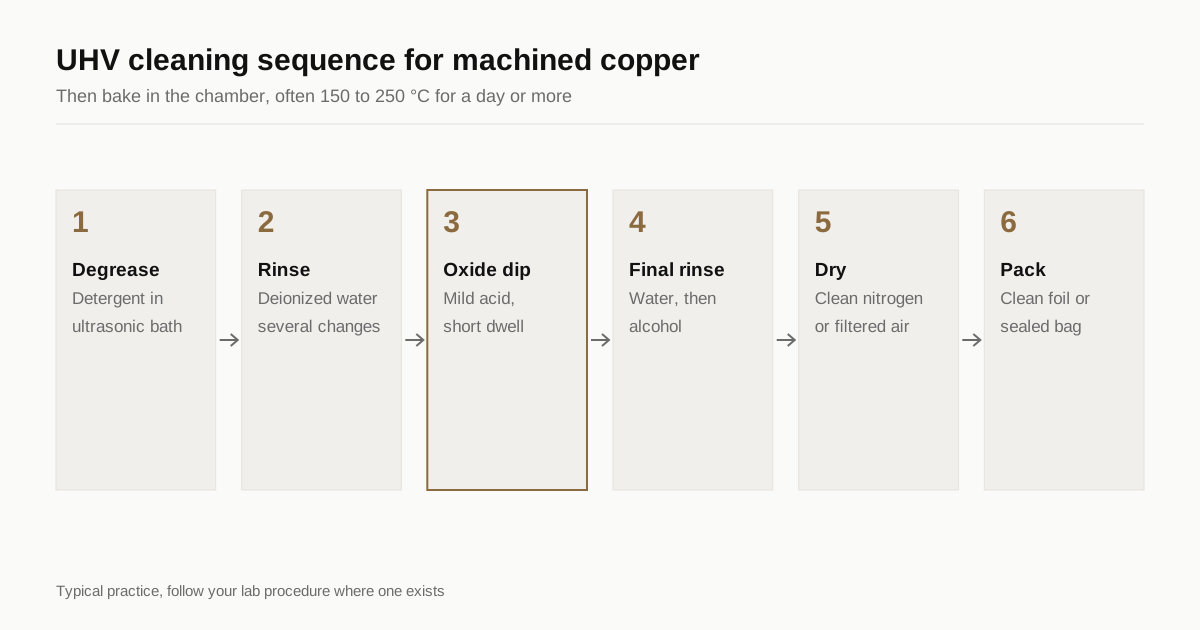
Every lab has its own procedure and the buyer’s standard decides. The sequence below is the common shape.
| Step | Typical method | Watch for |
|---|---|---|
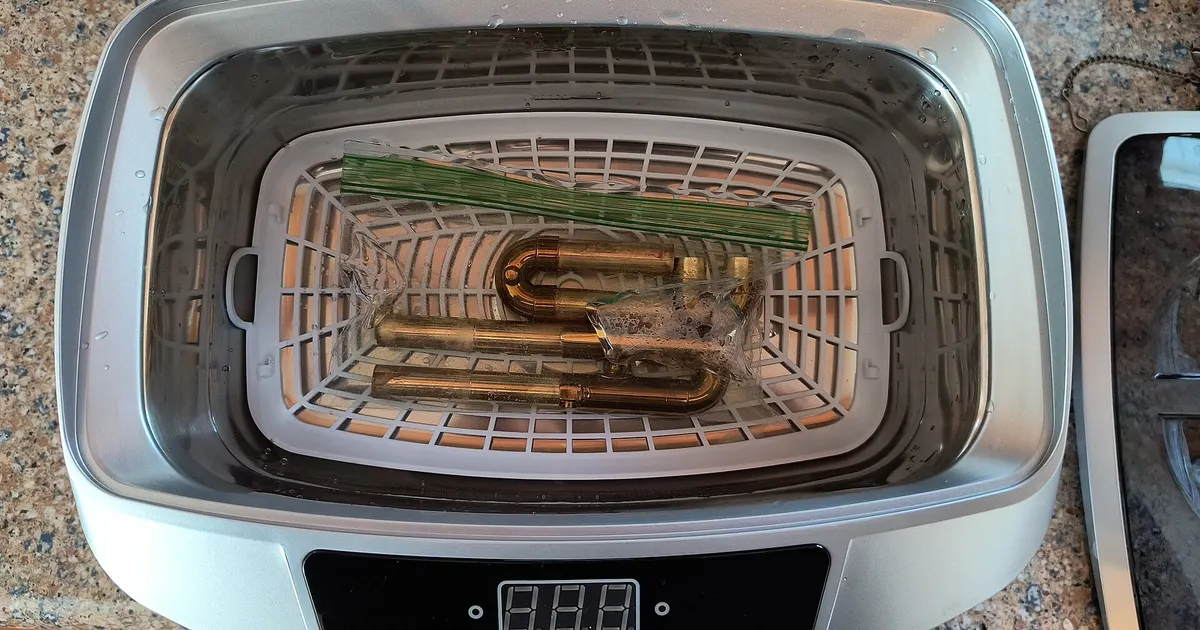
| 1. Remove bulk oil | Wipe, then solvent or alkaline detergent in an ultrasonic bath | Cross contamination between batches |
| 2. Rinse | Deionized water, several changes | Detergent films left in blind holes |
| 3. Remove oxide | Brief dip in a mild acid, such as a sulfamic acid solution | Time and strength, and rinsing afterwards |
| 4. Final rinse | Deionized water, then alcohol | Water spots, so dry promptly |
| 5. Dry | Clean dry nitrogen or filtered hot air | Oil in compressed air lines |
| 6. Pack | Wrap in clean foil or seal in a clean bag, backfill with dry nitrogen if required | Handling without gloves |
Detergent type, bath temperature, acid choice and dwell time vary by lab, and some labs add electropolishing. Treat the table as a map of the stages, not a recipe. If you need a specific procedure, name it on the drawing or supply it with the order.
Two cautions apply to the bath itself. Ultrasonic energy can mark very thin copper foil or fine edges, so ask the shop to test a sample on delicate parts. And an acid dip removes metal, so on tight tolerance surfaces allow for a few microns of loss and say whether the dimension is before or after cleaning.
Degreasing is not a UHV clean
Shops that degrease parts for ordinary use are not cleaning for vacuum. A wipe with solvent, a water rinse and a bag removes bulk oil. A UHV clean controls rinse water quality, tooling, oxide removal and packaging as well. Ask whether the shop has done vacuum parts before and what it does differently. If it has not, split the work. The shop machines and degreases, and your lab does the final clean.
Bake-out
Even a clean part has water on its surface. In a vacuum system, water is the main gas for days. The standard fix is a bake. The chamber and its contents are heated, often in the range of 150 to 250 °C, for a day or more while pumping. Water leaves the surface and the pressure drops by orders of magnitude.
Copper handles this temperature. Cold worked parts soften, so a hard drawn thread or sealing edge will lose some hardness. Check the effect with the supplier. Brazed assemblies need a braze alloy that survives the bake, and plated parts need a plating that does too.
Some labs also vacuum fire copper parts at higher temperature before assembly to drive off hydrogen. That is a separate process with its own furnace and records. Name it if you need it and expect a specialist.
Typical outgassing falls by several orders of magnitude after bake, but published figures vary with material, finish and procedure, so rely on your own system data.
How cleanliness is checked
There is no single universal test. Common checks include a water break test, where a clean surface lets a water film spread evenly while an oily one beads. Some labs also run a residual gas analyser on a sample part in a test chamber to see which gases dominate, and compare the pump down time with a reference part. Where a shop has to prove cleanliness, agree the check before the work starts and say who pays for it. A visual inspection under good light, with no stains, smears or particles, is the minimum for any vacuum part.
Packing and handling
A clean part is only clean until the first touch. Use powder free nitrile gloves and clean tools at every handover. Wrap parts in clean, vacuum grade aluminum foil or put them in sealed bags, and avoid plastics that release plasticizer. Label the package. Do not reuse packaging between batches. A part handled with bare hands has to be cleaned again.
What to write on the RFQ
- Grade and temper, with a clear statement that the part is for UHV
- The cutting fluid rule: dry, alcohol or buyer approved only
- Vent features shown on the drawing
- The cleaning standard or lab procedure, if you have one
- Who does the final clean, the shop or the buyer
- Packaging requirement and the glove rule
- Any bake temperature the part must survive
For parts that will also be brazed, read joining machined copper parts. For storing finished parts without tarnish, see copper passivation and anti-tarnish. And for grade choice, the page on C101 against C102 sets out the difference.
Send the drawing through the RFQ form and mark it as vacuum service. We match it with up to 3 shops that cut copper and reply within 24 business hours.
Frequently asked questions
Can the machining shop do the final UHV clean?
Some can, many cannot. A shop can degrease, rinse and pack a part properly, and that already removes most contamination. The final clean to a laboratory standard is often done by the buyer in the same facility that bakes and installs the part. Ask each shop what it offers and write the split on the RFQ.
Why does cutting fluid matter so much for vacuum parts?
Oils and some additives creep into pores, threads and blind holes, and then outgas for months. Sulphur, chlorine and silicone based fluids are the usual offenders. For vacuum parts, shops machine dry, with alcohol or with a fluid the buyer has approved.
Does a vacuum bake damage copper?
Normal bake temperatures for UHV systems, up to a few hundred degrees Celsius, do not harm oxygen free copper, though they will soften a cold worked part. If the part relies on a hard temper for sealing or threads, check the effect of the bake with the supplier.
Need a quote for this part?
Send the drawing. We match you with up to 3 copper shops and reply within 24 business hours.
Get matched with a copper machining shop