When a Machined Copper Part Needs Annealing and How to Ask for It
October 7, 2026
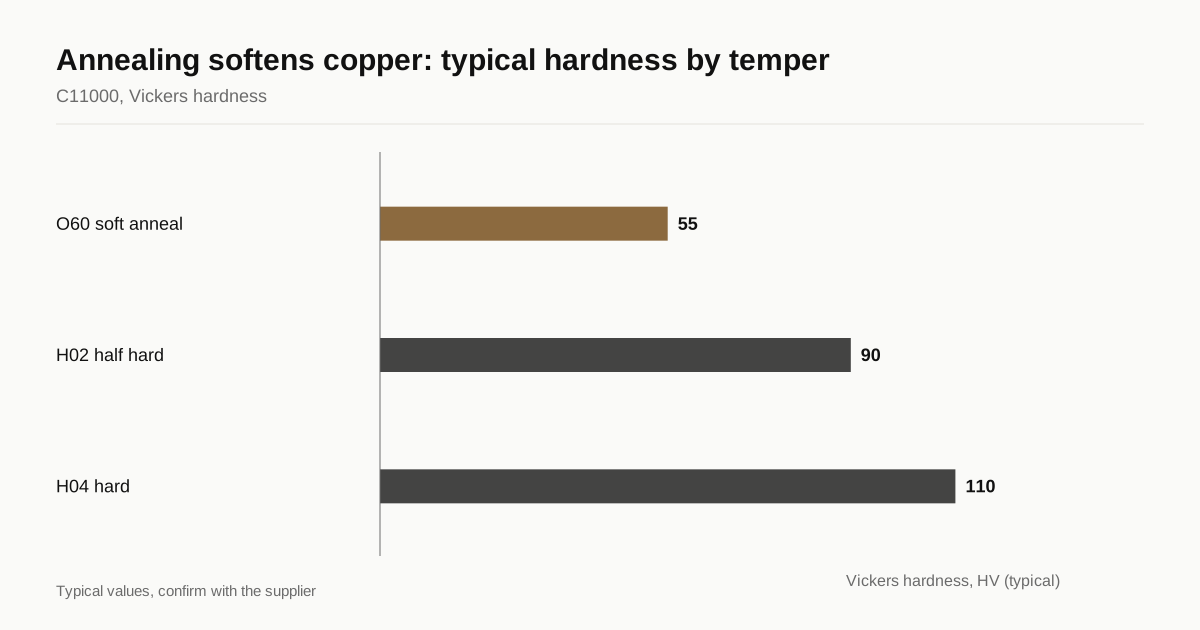
Copper arrives from the mill in a temper, hard or soft, and machining can change it. Sometimes a design needs a soft part that bends, crimps or flexes. Sometimes it needs a part that has lost the stress of heavy machining. In both cases the shop anneals it. This guide covers when a soft temper is worth the effort and what the heat treatment costs you in size and surface.
What annealing does to copper
Cold working copper, by drawing, rolling, bending or heavy machining, hardens it. Hardness and strength rise and ductility falls. Heating the metal lets new, strain free grains form and grow, and the hardness drops back. That is annealing.
The effect is large. A hard drawn bar can be roughly twice as hard as the same bar annealed. Conductivity also rises by a few points, from around 97 percent IACS in a hard temper to around 100 percent when soft.
The temper names
Tempers follow ASTM B601. The ones you meet most often in machined parts are these. Values are typical for C11000 and are indicative only.
| Temper | Name | Typical tensile strength | Typical hardness, Vickers |
|---|---|---|---|
| O60 | Soft anneal | 200 to 250 MPa | About 50 to 60 |
| H02 | Half hard | 250 to 300 MPa | About 80 to 100 |
| H04 | Hard | 300 to 350 MPa | About 100 to 120 |
For the full temper list and the codes for age hardened alloys, see copper tempers explained.
When a soft temper is the right call
Bending and forming. Flexible busbars, braided connection tabs and formed lugs need soft metal to bend without cracking. A half hard bar can crack on a tight bend, and annealing before forming prevents it.
Crimping and swaging. A terminal that must crimp onto a cable works best soft.
Sealing surfaces. A copper gasket or knife edge seal needs a soft material that conforms. Annealed oxygen free copper is the usual material for knife edge vacuum gaskets.
Stress relief. A part machined heavily from hard bar carries internal stress. When the cut removes material unevenly, the stress releases and the part moves. Annealing before the finish cut stabilizes it.
Restoring ductility. After heavy forming, a second anneal lets the part be formed further.
When to avoid it
Annealing makes copper soft, and soft copper is harder to machine and easier to damage.
- It smears under the tool, so burrs get bigger and surface finish is poorer.
- It marks in fixtures and dents in handling.
- It cannot carry load, so threads and bearing faces strip sooner.
- It may fall below a hardness your assembly needs.
If the design needs a soft part only at one location, bend that region and keep the rest hard. Or ask whether a half hard temper is enough. A drawing that says soft everywhere often means soft was easier to write than a real requirement.
Machine first or anneal first
The order of operations decides dimensions and cost.
Anneal before finish machining. The part is rough cut, annealed, then finished. Stress from roughing is gone, so the final cut holds size and the part stays flat. Machining soft copper is slower and gummier, so shops use sharp tools and light cuts.
Anneal after machining. The part is finished in a hard temper, which machines cleanly, then annealed to the soft condition. The part may move as stress relieves, so critical dimensions can shift by a few hundredths of a millimeter or more. This route suits parts with generous tolerances.
Anneal in the middle. Rough in hard temper, anneal, then finish. It combines clean roughing with a stable finish and is the usual route for parts that matter.
Whichever you pick, say it on the drawing. A note such as “anneal after rough machining, before finish” saves a debate.
Atmosphere and surface
Heating copper in air makes a dark oxide scale. Shops handle this in three ways.
- Anneal in air and pickle. The scale is removed in a dilute acid bath. It is cheap but takes metal and leaves a matte surface.
- Bright anneal in a protective atmosphere. A nitrogen based or similar atmosphere keeps the part clean and bright, with little or no scale.
- Anneal in vacuum. Used for high purity parts and for parts going into vacuum service.
One trap: copper that contains oxygen, such as C11000, can become brittle if heated in a hydrogen containing atmosphere. Hydrogen reacts with the oxygen in the metal and forms steam inside it. Oxygen free grades such as C10100 do not suffer this. If the atmosphere is unknown, ask the heat treater before sending C11000. See the grade page for C11000.
Time and temperature also matter. Too long or too hot lets grains grow coarse, and coarse grains give an orange peel surface on bending and lower strength. A good shop runs a controlled cycle and checks hardness.
Checking the result
Annealing is checked by hardness and, when it matters, by conductivity. A Vickers or Rockwell F reading on a flat face tells you whether the part reached the soft condition. For thin parts a superficial hardness scale or a micro hardness test avoids the part deforming under the indenter. A conductivity reading, as set out in IACS conductivity testing on finished parts, confirms recovery from the hard drawn value toward 100 percent IACS.
Ask the heat treater for a record that lists the temperature, the time at temperature, the atmosphere and the hardness result for each load. For a short run a note on the packing slip is enough. For a repeat order a proper record lets the next batch match.
A typical sequence for a flexible busbar
A formed, flexible busbar shows how the steps fit together.
- Cut the blank from half hard plate and drill the holes.
- Anneal to a soft temper in a protective atmosphere so the metal bends without cracking.
- Form the bends on the press brake. The metal work hardens slightly in the bend.
- Finish the contact faces and deburr.
- Plate the contact areas, with masking where required.
- Inspect, including hardness at the bend and conductivity.
The soft temper is needed only for the bending step. If the same bar bent cleanly in half hard, the anneal could be dropped, which is why a bend trial on a sample is worth the time.
Brazing is an anneal too
Any process that heats copper above its softening range anneals it. Brazing and welding soften the area around the joint, and some heat from soldering does too. A part that went in hard and comes out of a braze furnace is soft. If the design counts on hardness after joining, say which operation comes last. Joining machined copper parts covers the thermal effects.
What to write on the drawing
Material: C11000, ASTM B152 plate.
Temper after processing: O60 soft anneal per ASTM B601.
Hardness: 60 HV maximum, measured on face A.
Anneal after rough machining, before finish machining.
Protective atmosphere, no scale on finished surfaces.
Three details help. A hardness limit gives the heat treater something to measure. The operation sequence prevents surprises. The atmosphere line stops pickling from removing material on tight surfaces. For general callouts read how to specify copper on a drawing.
If you cannot decide between soft and half hard, ask for quotes on both. The price difference is usually small and the machining difference can be large.
Related points
Thin walls move more after annealing, as set out in thin wall copper machining. Soft parts mark easily in clamps, so see workholding copper without marking. For flexible and formed busbars, the copper busbar design guide gives bend radius rules.
Checklist for the RFQ
- State the final temper using the ASTM B601 code
- Give a hardness limit and where it is measured
- State the order: anneal before, after or between machining steps
- Name the atmosphere requirement and surface condition
- Mark critical dimensions that must hold after annealing
- Say if the part will be brazed, plated or formed afterwards
Send the drawing through the RFQ form. We match it with up to 3 shops that cut copper and reply within 24 business hours.
Frequently asked questions
Why would I anneal a copper part after machining?
To make it soft enough to bend, crimp or flex in assembly, to relieve stress left by machining and cold working or to restore a soft temper after a hardening step. If the part never bends and holds a tight size, annealing may add risk for no gain.
What temperature anneals copper?
Pure copper softens in roughly the 400 to 650 °C range, with time and prior cold work deciding the exact point. Heavily cold worked copper starts to soften lower. The shop sets the cycle, and you set the temper you need on the drawing.
Can I anneal chromium copper or beryllium copper to make it soft?
Not the usual way. These age hardening alloys get their strength from a precipitation heat treatment, and their soft condition comes from a solution treatment, not a simple anneal. Ask for the temper by name, for example TB00, and let a heat treater run the correct cycle.
Need a quote for this part?
Send the drawing. We match you with up to 3 copper shops and reply within 24 business hours.
Get matched with a copper machining shop